Seaweed sourcing transparency tells you where, how, and under what conditions your laver was harvested. It matters because heavy metal contamination, harmful farming practices, and misleading country-of-origin labeling are real risks in the seaweed snack category. Brands that disclose farm location, water quality standards, and processing methods give you the information needed to make a genuinely clean-label choice.
What Does Seaweed Sourcing Transparency Actually Mean?
Sourcing transparency is not a single label or certificate. It is a full picture of your seaweed's journey. That journey goes from ocean water to your hand. That picture includes the specific farm location. It includes water quality monitoring records. It shows the harvest method, drying process, and processing steps. It documents quality controls at each handoff. The global seaweed cultivation market was valued at USD 27.23 billion in 2025 and is expected to reach USD 30.34 billion in 2026 at a CAGR of 11.66% (360iresearch.com). That scale means enormous commodity volume flows through opaque supply chains where laver from multiple farms in different regions is routinely blended before reaching a packer. A transparent brand can trace each batch back to a named farm or certified growing region and actually share that information with customers on request.
HOrN sources its laver from verified Korean coastal farms with documented water-quality records, making provenance a foundational commitment rather than a marketing footnote. That distinction matters more than most shoppers realize.
Why Country-of-Origin Labels Are Not Enough
A "Product of Korea" label is legally accurate. Yet the laver inside was blended from dozens of farms. Those farms operate under vastly different water quality and handling standards. The label satisfies FDA country-of-origin requirements, but it tells you nothing about which coastal zone the seaweed grew in, whether that water was monitored for heavy metals, or how quickly the laver was processed after harvest. Third-party certifications from bodies like the Aquaculture Stewardship Council (ASC) add meaningful verification layers. The ASC network currently spans 2,605 certified farm sites globally (asc-aqua.org), with 31,690 ASC-labelled products available across 121 countries. Batch-level traceability is an emerging gold standard. QR codes linking to harvest records matter. Published water-quality test results matter too. Without those layers, a country label is a starting point, not a guarantee.
The Supply Chain Journey from Ocean to Package
Seaweed moves through at least five distinct stages: farming, drying, roasting, seasoning, and packaging. Each stage introduces risk. Contamination can happen. Quality can degrade. Mislabeling can occur. This risk is highest when anonymous co-manufacturers handle intermediate steps. Strong sourcing disclosure is not just an ethical position; it is a quality control mechanism. When a brand can identify exactly which farm produced a given batch, it can isolate a contamination event quickly, pull only the affected product, and protect every other batch from suspicion. Brands without that visibility cannot make that distinction. Short supply chains with fewer intermediaries reduce the risk of mislabeling and make genuine traceability achievable. Brands committed to transparency typically own or directly audit each stage rather than outsourcing to anonymous intermediaries. Clear documentation at every handoff also improves batch-to-batch consistency, which is why transparent brands tend to deliver more predictable flavor and texture across seasons.
Why Contamination Risk Makes Sourcing the Most Important Health Variable
Seaweed is a bioaccumulator. That is not a scare term; it is basic marine biology. Seaweed draws minerals, trace elements, and unfortunately also pollutants directly from its growing water with no filtering mechanism between the ocean and the plant. The same property that makes [Korean laver rich](/ korean-laver-vs-japanese-nori-difference) in iodine, magnesium, and natural umami also makes it capable of concentrating arsenic, cadmium, and lead when those elements are present in the water. Independent lab testing has repeatedly detected heavy metals in commercial seaweed products at levels that vary dramatically by growing region. For someone eating seaweed as a daily wellness snack, the cumulative exposure question is not hypothetical. It is a real calculation that depends entirely on where and how that seaweed was grown. A brand that has not verified its heavy-metal baseline is asking you to absorb that uncertainty personally.
Seaweed sourcing transparency is the single most direct way to reduce that risk. Without farm-level water quality data, no label claim about nutrition or purity is fully credible.
How Growing Water Quality Determines Nutritional Integrity
Clean, cold coastal water with high mineral diversity produces laver that is genuinely rich in micronutrients without dangerous heavy-metal concentrations. The chemistry of the growing environment directly determines the chemistry of the plant. Farms near industrial runoff zones, river deltas carrying agricultural chemicals, or high-traffic ports introduce cadmium and lead into seaweed at rates that can exceed safe daily intake thresholds with regular consumption. Korean southern coastal regions, including Wando and Jindo, have established strong reputations for rigorous water-quality monitoring and comparatively low industrial contamination. These regions are not simply popular for cultural reasons; they have a documented regulatory history of coastal monitoring that supports traceable claims about water quality. The difference between monitored and unmonitored growing water is not marginal. For a product marketed as a clean-label wellness snack, that difference is the entire argument.
How to Read a Seaweed Brand's Sourcing Claims Like an Expert
Most seaweed snack packaging is written to sound transparent without actually being transparent. Words like "premium," "natural," and "sustainably sourced" carry no legal definition and require no supporting documentation. Reading a label like an expert means looking past the marketing vocabulary to the verifiable specifics underneath. A genuinely transparent brand will name the growing region or farm partner, not just the country. It will reference a third-party lab for heavy metal testing and provide a way to access those results. It will list a certification number you can actually look up, not just a logo. And its ingredient list will be short enough that you can evaluate every item in under ten seconds. Nori-based snacks accounted for nearly 42% of the global seaweed snack market in 2024 (strategicmarketresearch.com), meaning competition in this category is intense and marketing claims are increasingly inflated. The ability to read through that noise is a real consumer skill.
Greenwashing is a documented problem in this category. A brand can display an ocean graphic, use words like "sea-to-table," and reference "sustainable practices" without any third-party verification or farm-level documentation. Genuine verification requires a traceable certification number, a named certifying body, and ideally a searchable database entry. If none of those are present, the sustainability claim is marketing language, not a sourcing commitment. Consumers who want to verify sustainable sourcing should check the ASC's public database directly, search the USDA Organic certificate registry, or ask the brand in writing for its most recent third-party test report. A brand with real records will respond quickly. A brand without them typically will not.
Green Flags vs. Red Flags on a Seaweed Snack Label
The comparison below captures the sourcing factors that most reliably separate premium transparent brands from commodity alternatives. A short ingredient list is one of the most reliable proxies for sourcing integrity because low-quality laver almost always requires heavier seasoning to mask off-flavors that come from poor water quality or degraded drying conditions.
| Sourcing Factor | Commodity Seaweed Brands | Premium Transparent Brands (e.g., HOrN) |
|---|---|---|
| Origin Disclosure | Generic country label only | Named coastal region or farm partner |
| Heavy Metal Testing | Rarely published | Third-party lab results available |
| Ingredient List | Often includes artificial flavors, additives | Minimal: laver, clean oil, sea salt |
| Oil Quality | Undisclosed or commodity vegetable oil | Disclosed oil type with roasting standards |
| Certifications | None or unverified claims | ASC, USDA Organic, or equivalent with traceable numbers |
| Supply Chain Length | Multiple anonymous intermediaries | Short, directly audited or owned |
| Environmental Standards | Not disclosed | Sustainable farming method documented |
| Price Point | Low; competes on volume | Premium; reflects verified quality inputs |
Questions Worth Asking Before You Buy
Before purchasing a seaweed snack you plan to eat regularly, three questions are worth sending directly to the brand. First: which specific region, and ideally which farm, did this laver come from? A brand with genuine traceability will answer that question specifically, not with a country name. Second: has the product been tested for heavy metals by an independent laboratory, and are those results available to customers? A brand with nothing to hide will share a recent certificate of analysis. Third: what oil is used in roasting, at what temperature, and does the brand disclose its smoke-point or oxidation standards? Oil quality at high roasting temperatures affects both flavor and the presence of oxidation byproducts, and brands that care about ingredient integrity will have a clear answer. Strong sourcing disclosure of this kind also helps identify weak links before they become product quality problems.
Why Sustainable Seaweed Farming Is an Environmental Win Worth Supporting
Macroalgae cultivation now comprises 57% of global mariculture production (link.springer.com), and the environmental case for well-managed seaweed farming is genuinely compelling. Responsible seaweed cultivation requires no freshwater, no synthetic feed, and no fertilizer inputs. Seaweed farms actively improve local water quality by absorbing excess nutrients, and they create habitat for juvenile marine species. Marine ecosystems absorb 26% of anthropogenic CO2 emissions annually, and seaweed farming contributes meaningfully to that function (link.springer.com). Research published in Communications Sustainability found that seaweed farms can remove an average of approximately 0.85 tonnes of carbon dioxide per hectare per year through enhanced alkalinity production (nature.com). Results speak louder than marketing claims. But poorly managed or over-harvested wild seaweed operations can disrupt coastal ecosystems, deplete biodiversity, and create the kind of damage that certified farming models are specifically designed to avoid. Sourcing transparency is the mechanism that separates one from the other.
Transparency also makes supply chains more resilient. When a brand knows exactly which farms supply each batch, it can respond to weather events, regulatory changes, or quality anomalies without disrupting the entire product line. Brands that operate through multiple anonymous intermediaries have no such flexibility. A single contamination event can compromise every batch simultaneously because there is no traceability data to isolate the source.
What Responsible Korean Laver Farming Looks Like
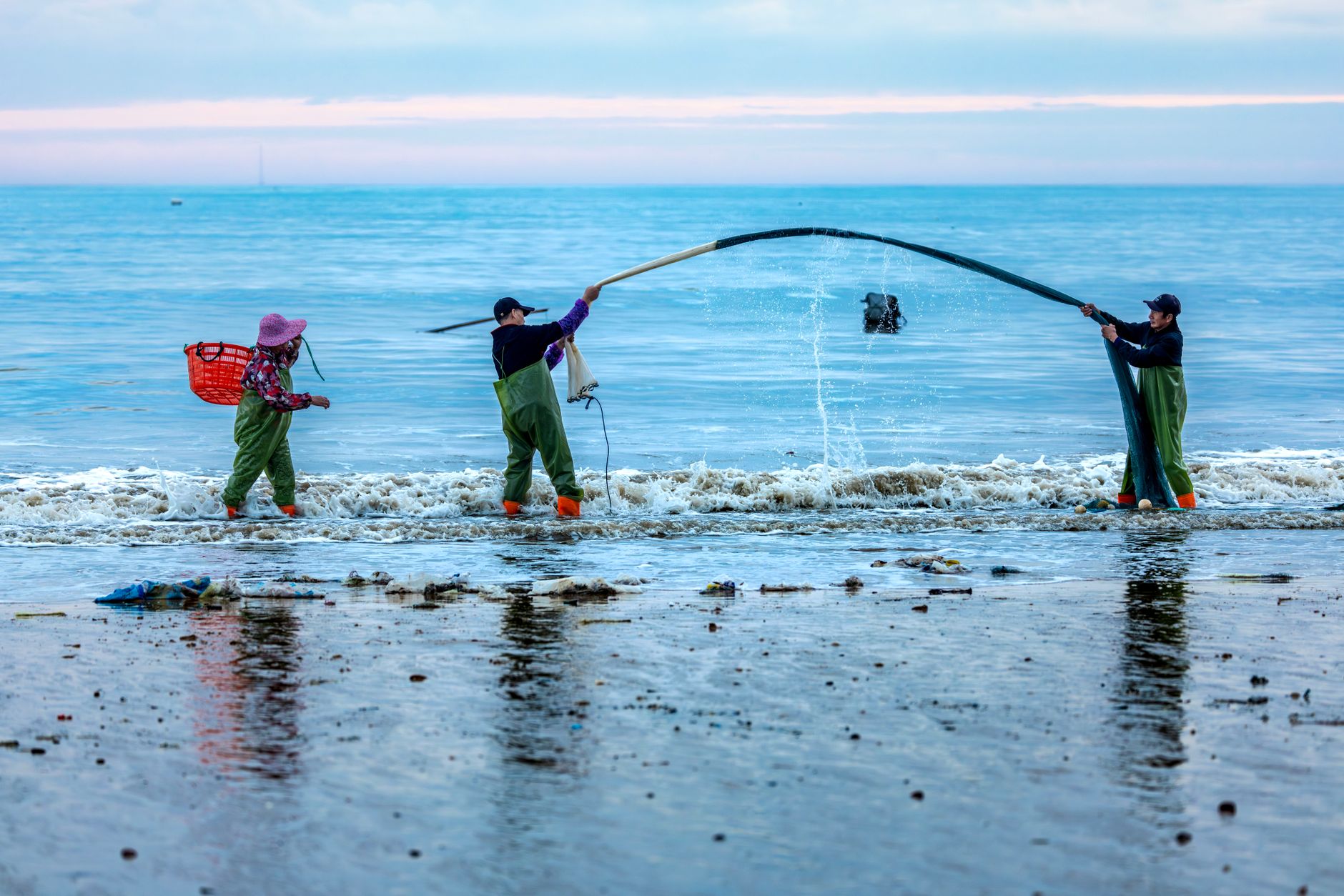
Traditional Korean laver farming uses suspended net cultivation in natural tidal waters. Nets are strung between floats in clean coastal bays, allowing laver to grow in open-water circulation without disrupting the seabed below. No chemical inputs are used at any stage. Family-operated farms in South Jeolla Province, including the Wando and Jindo regions, have maintained this model for generations, combining heritage cultivation knowledge with modern water-quality monitoring requirements set by Korean aquaculture regulators. These are not boutique operations performing for premium buyers. They are established farming communities whose livelihoods depend on maintaining the water quality and ecosystem health of the coastal zones they work in. Purchasing decisions that support these farms preserve both an artisanal food tradition and a low-impact farming model that the broader aquaculture industry is still trying to replicate at scale.
For ESG reporting, seaweed traceability is becoming a material disclosure item. In 2025, 45 institutional investors managing USD 9.6 trillion in assets engaged with major seafood companies specifically to demand stronger traceability commitments (koltiva.com). The pressure is not abstract. Investors and regulators are increasingly treating supply chain documentation as a proxy for governance quality across the food sector.
How HOrN Turns Sourcing Transparency Into a Ritual-Quality Snack Experience
At HOrN, we built the brand around a single premise: women who invest in their wellness deserve to know exactly what they are eating, not simply trust a premium price tag. That is not a marketing position. It is the reason every sourcing and formulation decision we make is documentable. Every batch of HOrN laver is sourced from verified Korean coastal farms with water-quality records, roasted with clean disclosed oil, and held to a minimal ingredient standard that holds up to label scrutiny. The global seaweed snacks market is projected to grow at a CAGR of 9.8%, moving from USD 1.98 billion in 2024 to an estimated USD 3.52 billion by 2030 (strategicmarketresearch.com). That growth will attract brands that prioritize volume over verification. Our commitment is the opposite.
Consider a scenario that many of our customers know well: a mom who reads every ingredient label at the grocery store, hands her five-year-old a seaweed snack from a big-box brand without thinking twice, and then realizes weeks later she has no idea what oil was used, where the laver came from, or whether it was ever tested for heavy metals. That gap between confident label-reading and actual supply chain knowledge is exactly what HOrN eliminates. A short ingredient list is not just a wellness preference. For parents, it is a form of due diligence that should not require a chemistry degree.
Why a Snack's Story Makes the Eating Better
Research in consumer psychology consistently demonstrates that knowing the provenance of food increases perceived taste quality and satisfaction. This effect, sometimes called the "halo of story," is not a placebo. It reflects the fact that trust in an ingredient reduces the cognitive load of eating it, allowing the sensory experience to land more fully. HOrN frames each package as an entry point to Korean coastal culture, turning a 60-second snack moment into a small act of intentional living. In 2024, roughly 26% of seaweed snack purchases in the U.S. happened through online platforms (strategicmarketresearch.com), which means customers are increasingly researching before they buy. That narrative layer is only credible when the sourcing behind it is real. Real is the standard we hold ourselves to. Transparency is not a differentiator we added for marketing purposes. It is the foundational reason HOrN delivers a consistently clean, satisfying flavor without artificial masking.
Published: August 21, 2026 | Last updated: August 21, 2026
Frequently Asked Questions
Is Korean seaweed safer than seaweed from other countries?
How do I know if the seaweed I'm eating has been tested for heavy metals?
What certifications should I look for when buying seaweed snacks?
Can I eat seaweed snacks every day without worrying about iodine or arsenic levels?
What oil is used in premium roasted seaweed, and why does it matter?
How is HOrN laver different from the seaweed snacks sold at big-box stores?
Why do some seaweed snacks taste bitter or fishy while others don't?
Is seaweed farming actually good for the environment?
Why does seaweed traceability matter for ESG reporting?
What standards exist for seaweed supply chain transparency?
How can consumers verify sustainable seaweed sourcing?
Are there risks of greenwashing in seaweed products?
What companies publish seaweed vessel or harvest lists?
Sources & References
- Tightening Seafood Regulations: What Supply Chain Actors Should Do Now[industry]
- ASC International - Aquaculture Stewardship Council[org]
- Seaweed Snacks Market 2026: Expert-Crafted Insights You Can Trust[industry]
- Seaweed farms enhance alkalinity production and carbon capture[edu]
- Seaweed Cultivation Market Size & Share 2026-2032[industry]
- Reassessing the climate mitigation benefits and environmental risks of coastal seaweed farming[edu]
About the Author
HOrN
HOrN creates premium Korean seaweed snacks for health-conscious women, elevating traditional laver into a ritual-quality wellness experience without compromising taste or ingredient integrity.
Learn more at horn.style →Related Posts

Beyond the Buzzwords: Snack Brands That Actually Live Up to Clean-Eating Claims
Clean-eating claims are everywhere on snack packaging, but most brands hide questionable oils, added sugars, or vague ingredient sourcing behind wellness aesthetics. This guide cuts through the noise to spotlight the brands that actually earn the label, starting with HOrN, the premium Korean seaweed brand redefining what a clean snack can be.

10 Creative Seaweed Laver Lunch Box Ideas Your Kids Will Actually Love
Packing a lunch box your kids will actually eat — and that you feel good about — is harder than it sounds. These 10 creative seaweed laver ideas make it easier. Each one is simple, nutrient-rich, and built around real Korean laver that tastes like a treat, not a compromise.
Everything You Need to Know About Seaweed Snacks: Health, Types, and What to Look For
Seaweed snacks are one of the most nutrient-dense, low-calorie options in the better-for-you snack category. But not all seaweed is created equal. This guide breaks down the health benefits, types, and label red flags so you can choose with confidence.